
What Are the Types of Ventilators?
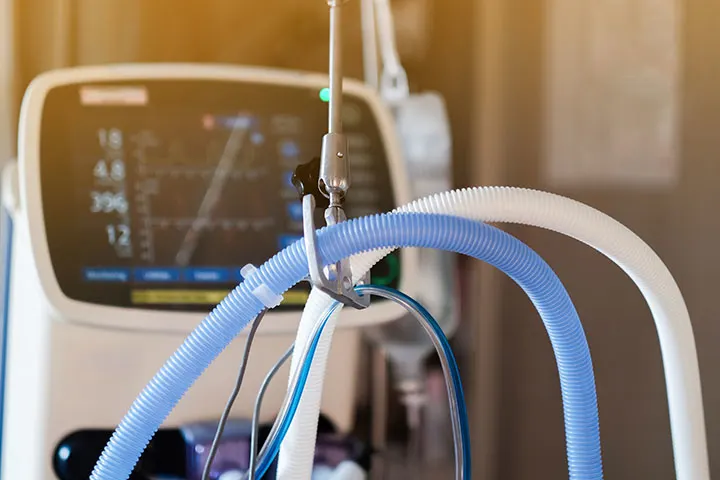
Over the years, mechanical ventilation has undergone numerous innovations. These innovations have allowed ventilators to be used to meet a broader range of patient needs. This is accomplished by using different types of ventilators that are geared toward patients with various medical conditions.
Negative and Positive Pressure Ventilation
In older times, ventilator types were divided into negative and positive pressure ventilation. And although ventilators of the modern era no longer use negative ventilation, it is worth noting their existence to appreciate how positive pressure ventilation works.
When we breathe, the air is brought into the lungs when there is a difference in the air pressure between the airway and the alveolus. Ventilators create this difference by reducing the pressure around the lungs or increasing the pressure in the airways. The former is negative pressure ventilation, which is typically bulky and impractical, and the latter is positive ventilation. Positive ventilation can be done with greater ease, making it easier to create different varieties of these types of ventilators.
Types of Positive Pressure Ventilators
Invasive Ventilator
Invasive ventilation requires tracheal intubation that involves running a plastic tube down the trachea. This can be administered in two ways: orotracheal or nasotracheal.
Orotracheal
Orotracheal intubation is the more common form of invasive ventilation, which requires running the tubing down the patient's throat. This can be done quickly and is especially valuable for patients who are critically ill and cannot breathe on their own.
Nasotracheal
In this form of ventilation, the tube is inserted into the nose. Although this form of invasive ventilation is more challenging for both doctors to perform and patients to endure, nasotracheal is useful for patients who cannot have the tube inserted into their mouths.
Non-Invasive Ventilators
Non-invasive ventilators are used when patients are conscious, are not undergoing surgery, and are able to breathe on their own. Because it is so simple to place someone on this type of ventilation, it can be used for various purposes, from chronic respiratory failure to sleep apnea.
What Are the Types of Ventilators That Are Emerging Technologies?
Modern respiratory care relies on a wide mix of ventilator designs, each created to support different patient conditions and treatment timelines. As technology has evolved, so have the ways clinicians use these devices. Many hospitals now rely on specialized ventilators to help manage complex patient populations, streamline workflows and improve consistency in respiratory therapy.
Transport Ventilators
One important category includes transport ventilators, which are built for mobility. These units are compact and durable, allowing teams to move patients safely between departments or facilities without interrupting respiratory support. Their value is especially clear in emergency settings where stability and quick setup matter. Because transport ventilators must perform reliably in unpredictable environments, facilities often turn to rental options that ensure the equipment stays patient-ready.
Portable Ventilators
Portable ventilators have also become essential. They offer versatility for step-down units, long-term care settings and acute care environments where clinicians need dependable support without the footprint of a traditional ICU ventilator. Their adaptability allows providers to scale up or redirect resources during peak demand.
High-Frequency Ventilators
Another growing group of devices includes high-frequency ventilators. These machines deliver very small breaths at rapid rates, helping clinicians protect fragile lungs while still supporting gas exchange. They are especially useful in neonatal units and certain adult cases where conventional ventilation may cause too much strain. Since these devices require specific training and careful monitoring, many hospitals keep them in reserve through flexible rental plans that align with fluctuating census levels.
Reliable Ventilator Access From Med One
Request Quote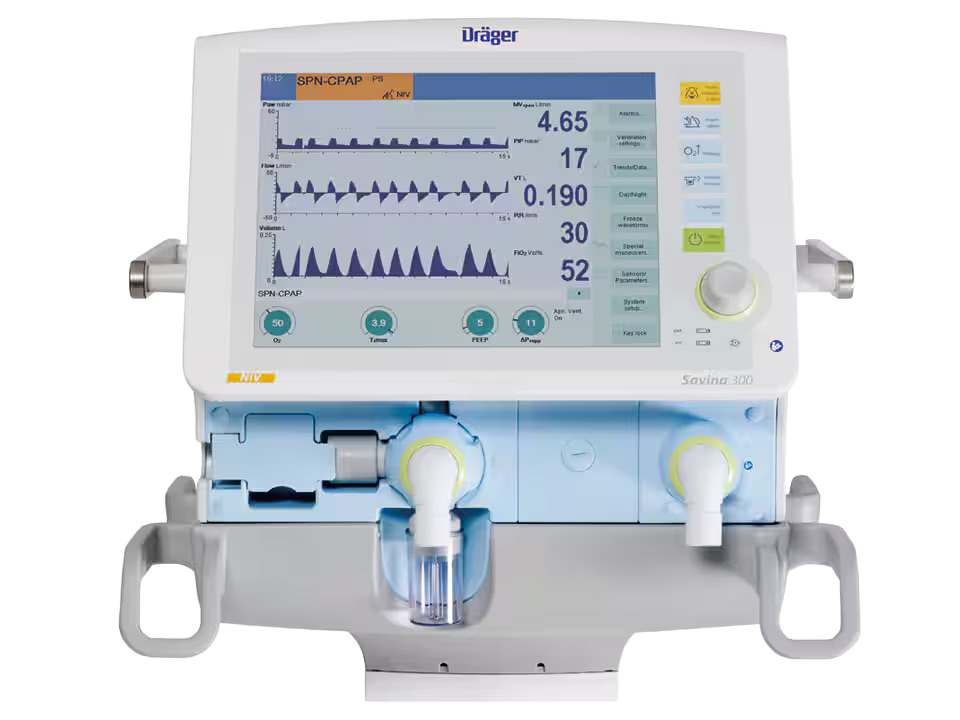
Reliable Ventilator Access From Med One
For facilities that need access to a wide range of ventilator models, Med One makes it easier to stay prepared. We supply reliable equipment through simple rental and leasing processes designed for real clinical pressures. Whether your team needs day-to-day respiratory support or specialized ventilators for unique cases, Med One delivers what you need when you need it.
Understanding the types of available ventilators will help you meet the needs of all your respiratory patients. Here at Med One Group, we provide medical equipment rental services to help meet the needs of all healthcare facilities.